Back to Bach with Lozakovich
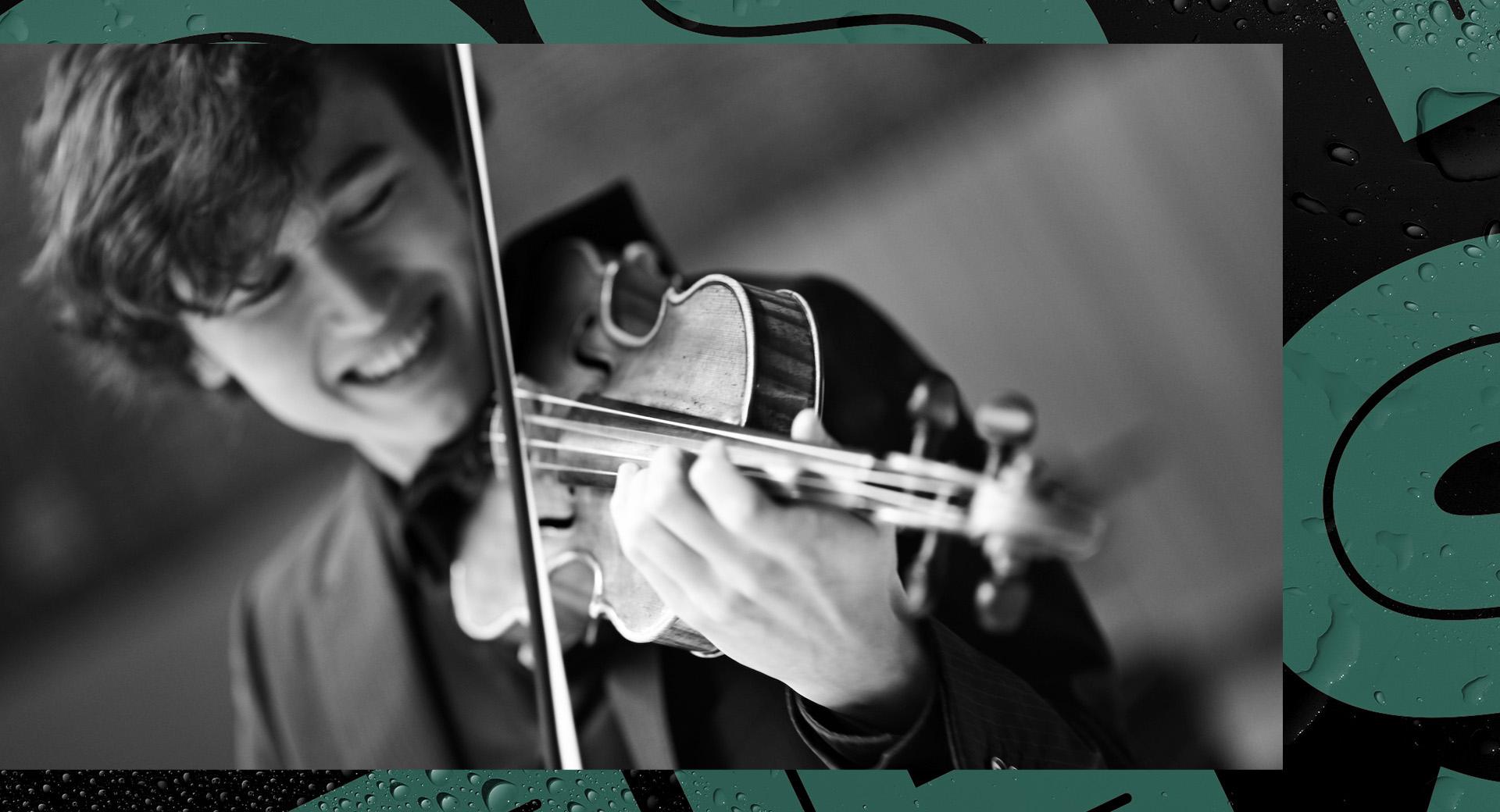
Internationally acclaimed violinist Daniel Lozakovich offers an exclusive concert in Storkyrkan featuring music by his great artistic beacon, Johann Sebastian Bach. The programme brings together three central works from Bach’s music for solo violin – at once a technical compendium and an artistic testament. Here we are invited to experience the sparkling Partita No. 3 in E major, the expressive Sonata No. 1 in G minor, and the Partita No. 2 in D minor, with its iconic Chaconne as the concert’s undisputed highlight.
This production is part of one or more concert series.
The concert is broadcast live on P2.
At the age of 24, violinist Daniel Lozakovich is already an international top soloist with five acclaimed albums, and is one of the youngest artists ever to sign with Deutsche Grammophon.
In this concert, you will have the opportunity to experience Lozakovich delving into Johann Sebastian Bach, a composer he himself has described as his most important musical guiding light. “Bach is like a whole planet. He was the first composer to show that music can reach beyond the mundane and touch something almost spiritual,” Lozakovich has said.
The program includes Partita No. 3 in E major, Sonata No. 1 in G minor and the monumental Partita No. 2 in D minor. Here, a lone violin has an enormous range, from dazzling virtuosity to profound spirituality.
A technical compendium and an artistic testament
Bach’s six works for solo violin, three sonatas and three partitas, are among the greatest treasures in Western music history. They were probably composed around 1720, during his employment as Kapellmeister at the princely court in Köthen. It was a period when he had access to skilled instrumentalists and was also free from the liturgical demands of the church. The collection constitutes both a technical compendium and an artistic testament, in which Bach summarizes his views on form, counterpoint and expression, while simultaneously stretching the possibilities of the violin to the limit.
Writing polyphonic music for a single melody instrument was nothing new, but Bach took this art to an unprecedented level. Using double and triple notes, arpeggios and carefully shaped melodic lines, he created a strong illusion of several simultaneous parts. The result is music that demands extreme concentration and technical control from the violinist, but at the same time offers the listener an abundance of timbre, structure and emotional depth.
Perfect examples of unitary composition
Bach’s pupil Johann Philipp Kirnberger (1721–1783), who later published a comprehensive compositional theory based on the teaching, highlighted these solo works as perfect examples of unitary composition. He believed that they were so complete in themselves that no additional parts could be added without the whole being lost. Thanks to this, Bach’s solo works came to serve as a kind of ideal model for later generations of composers and instrumentalists.
Although Bach is today often associated with organ and keyboard instruments, there was a strong violin tradition in the family, both his father and grandfather were violinists, and he himself mastered the instrument well. It has often been suggested that the solo works were written for the Dresden virtuoso Johann Georg Pisendel (1697–1755), or possibly for Bach himself, but no dedications are preserved in the earliest sources.
The sonatas are written in the so-called sonata da chiesa form, with four movements in the sequence slow–fast–slow–fast. The fast movements are often characterised by strict counterpoint, while the slow ones allow for ornamentation, harmonic exploration, and rhetorical freedom. The partitas instead follow the form of the suite, where different dances replace one another. Here too, Bach breaks the framework, transforming the dance movements into in-depth musical meditations rather than pure entertainment.
Bach is like a whole planet. He was the first composer to show that music can reach beyond the mundane and touch something almost spiritual. – Daniel Lozakovich
Three technical and spiritual trials
Violin Partita No. 3 in E major represents the brightest and most outward-looking side of the collection. The key, the virtuoso writing, and the concise format of the suite give the music a festive and radiant character. The famous Prelude, with its uninterrupted stream of sixteenth notes, gives the impression of unbridled movement and splendour. Bach later reused this material in several other works, which testifies to its special importance for him. The following dance movements – Loure, Gavotte en rondeau, two Minuets, Bourrée and Gigue – are characterised by elegance, balance and playful rhythm.
Violin Sonata No. 1 in G minor opens the collection with a concentrated and serious Adagio, but the extensive Fugue that follows is one of the absolute centres of the collection. A polyphonic structure where the theme wanders between suggested parts, creating a dramatic tension that almost defies the limitations of the instrument. The gentle and singing Siciliana offers a lyrical contrast, before the sonata ends with an intense Presto, full of movement and rhythmic energy.
Violin Partita No. 2 in D minor occupies a special position in the entire violin repertoire. The four opening dance movements (Allemande, Courante, Sarabande and Gigue) lead up to the monumental Chaconne, a variation work of almost existential dimensions. Over a recurring harmonic foundation, Bach builds a musical arc that spans from deepest sorrow to radiant light. The Chaconne has often been interpreted in spiritual and philosophical terms, and has inspired countless composers, arrangers and thinkers over the centuries. For the violinist, it is both a technical and spiritual test, and for the listener, one of the most transformative experiences in the history of music.
Text: Andreas Konvicka (translated by Anna Rickman)
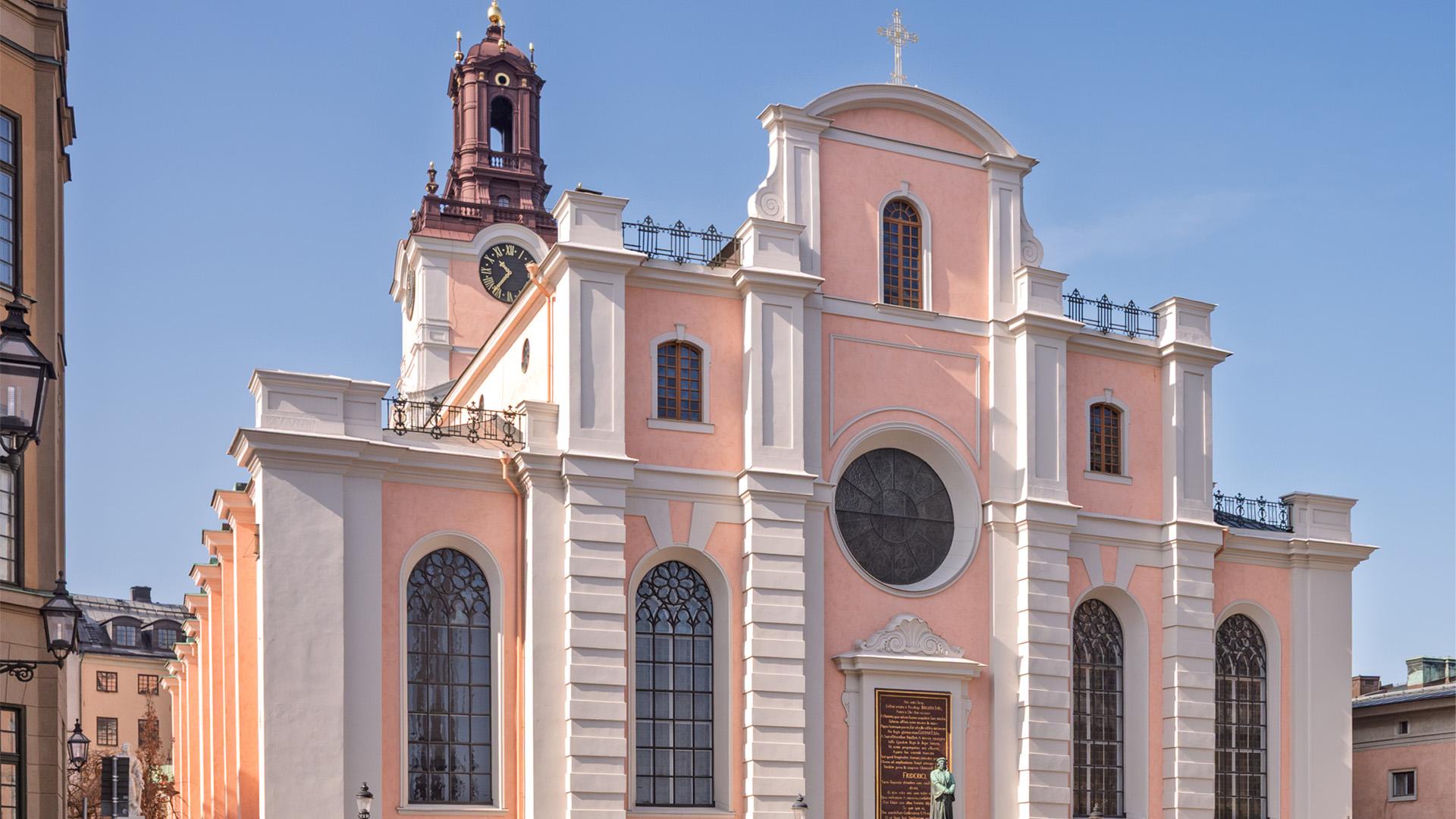
Get to Storkyrkan
In Old Town between Stockholm Castle and Stortorget stands Storkyrkan, at Trångsund 1. You can easily get here by bus no. 2, 57 or 76 – get off at the Slottsbacken stop – or the red or green line of the T-banan – get off at Gamla stan station.
Ticket purchase
Back to Bach with Lozakovich
22 August
- Buy tickets
22 August 2026 ● saturday 18:00
Few seats remaining
Read more about this year's festival
The Baltic Sea Festival returns to Stockholm from 21–29 August 2026, filling the city with music that spans the intimate to the monumental. You can look forward to a rich mix of orchestral concerts, chamber music, choral works, jazz explorations, contemporary premieres, and boundary-crossing collaborations.
More concerts
 16 AugustFrom the Firebird to BoléroWhen the Swedish Radio Symphony Orchestra comes to Gustav Adolfs Torg, an evening of music awaits, spanning different eras and worlds. The...Read more
 21 August350 - 650 krRythm and ritualThe Baltic Sea Festival 2026 opens with premieres and pulse! Andres Orozco-Estrada debuts as Chief Conductor, Hillborg’s Hell Mountain has its Swedish premiere, and Molly Kien’s new work receives its world premiere. Soprano Malin Byström sparkles in Alma Mahler’s songs before the evening culminates in Stravinsky’s iconic The Rite of Spring.Read more & tickets
 22 AugustiFamily day and open houseJoin the Baltic Sea Festival's traditional family day for all ages!Read more
 22 augusti180 krWho will save Alfie Atkins?Alfie sits alone in the apartment where he lives and feels lonely. He has moved to a new place and doesn’t know any of the other children there. Sometimes his imaginary friend Malcolm appears, and when they play together, Alfons always gets to decide — like being the train driver when they play trains. The problem is that Mållgan never shows up when he is really needed, like when the “big boys” chase Alfons and spray his jacket with water pistols. A performance about friendship, based on Alfie Atkins, the beloved children’s book character created by Gunilla Bergström.Read more & tickets